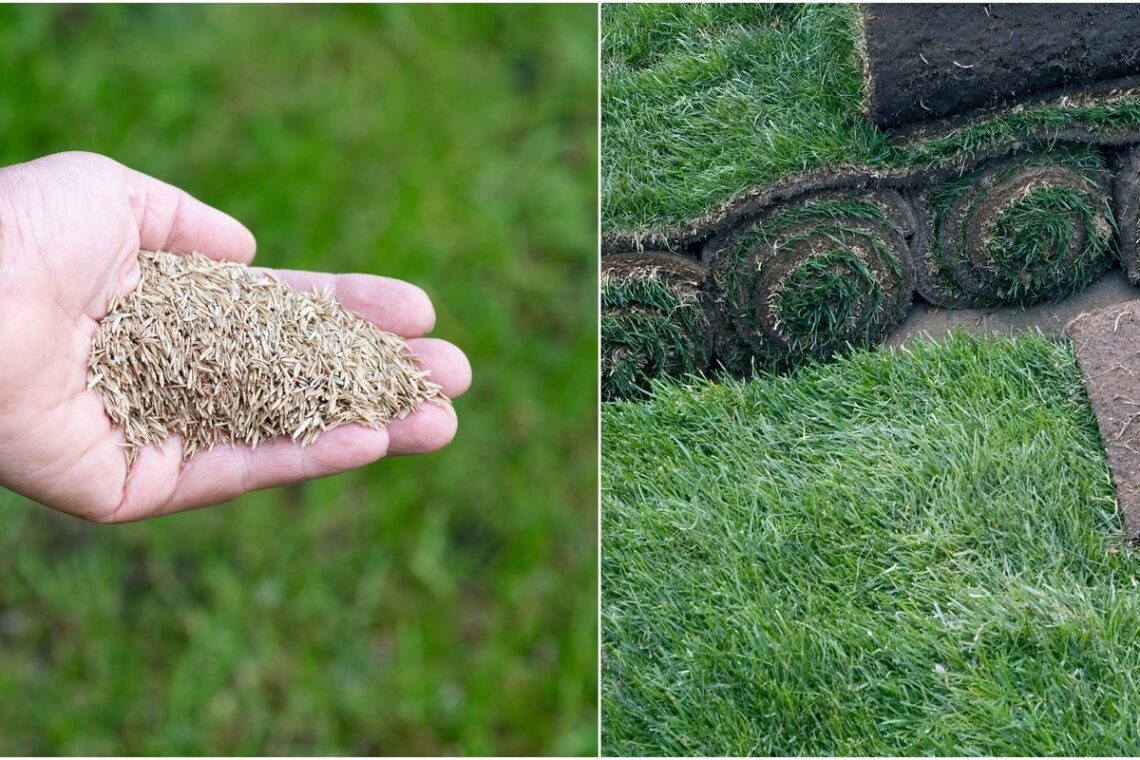
Turf vs seed: which is the best option for you?
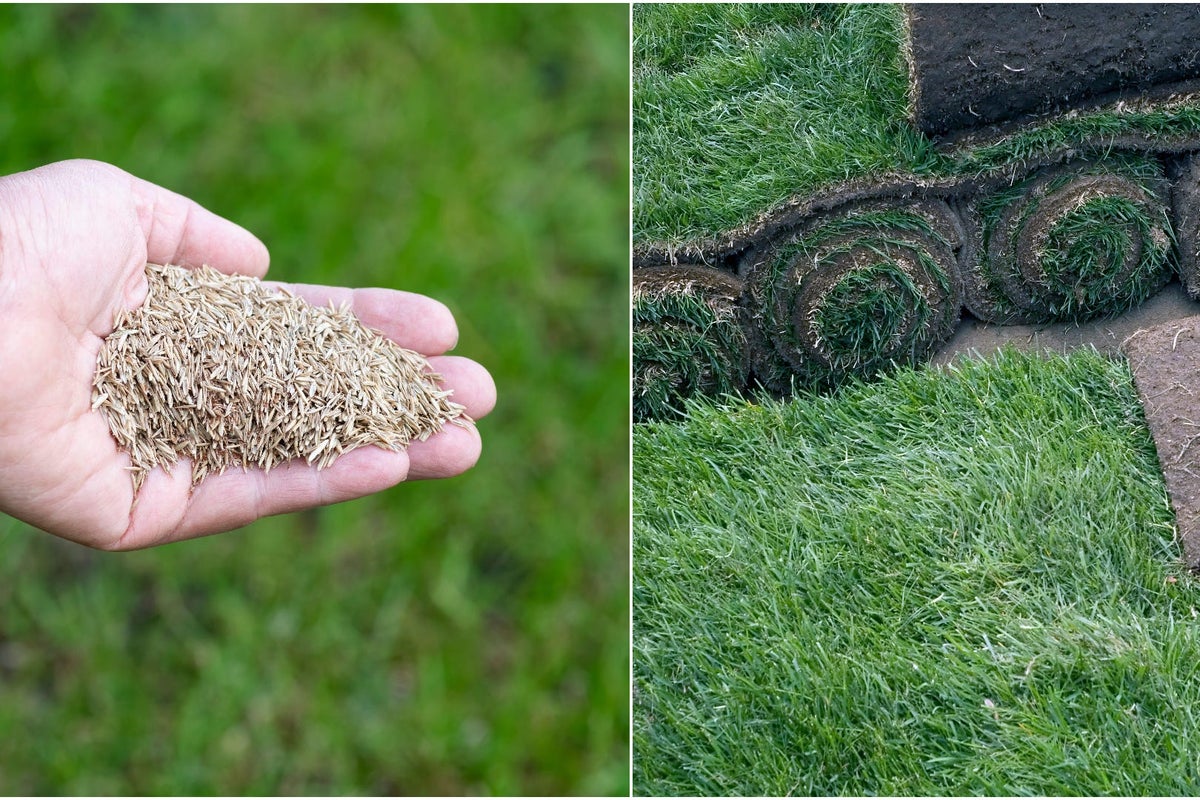
As gardeners start to spruce up their lawns in spring, some will be wondering which option to go for – turf or seed?
There are pros and cons to each, says lawn expert Luke Taylor, co-author of Lawns: An Uncomplicated Guide, with Marc Kerr, joint founders of lawncare service So & Mo.
“It’s all down to scenario and cost,” says Taylor, and here, he weighs up the options of each.
For the budget-conscious
“If you can afford to returf, it’s going to be the quickest way, whereas if cost is a factor, there’s no doubt that seeding is a lot more cost-effective,” says Taylor.
For quick-fix gardeners
If you want a transformation, turf is for you, and once laid should be ready for play in a couple of weeks. But check it has been in the ground long enough to develop a strong root system and density before you start mowing, he advises.
Once you’ve had the turf delivered, it needs to be laid within 24 to 36 hours, Taylor adds, before it starts to deteriorate. If you’re turfing during a warm, dry spell, the turnaround time will need to be quicker. Make sure you roll it out quickly to stop it sweating within the roll, which will lead to rotting.
Seeding will take longer.
“If you are seeding it you are probably going to be looking at four to six weeks before you can actually go on it.”
Mixtures and cultivars
If you have a particular type of lawn in mind or a particular species of grass you quite like, that may have a bearing on your choice, he says.
“Some people want a fescue-based lawn. So if you’re on the coast and you’re based on sand and it’s really free-draining and you want a really ornamental, fine-style lawn, you will probably need mostly fescues.
“Rye grasses, on the other hand, predominantly tend to be a bit more broader-leafed, a bit fatter and a bit coarser.
“With seeds you control that narrative, you have control over the mixture, whereas with turf you are a little bit susceptible to bare patches and weeds.”
Turf is generally is made up predominantly of rye grass, but you need some fescues in it to bind it all together, he explains.
“If you are seeding an area you’re going to have to wait for the results, but the quality is probably going to be a lot nicer when it does come through,” he continues. “You will probably have better results from seeding.”
Preparation
Preparing the soil is more or less the same, whether you are seeding or turfing, he agrees.
“If you are re-doing your lawn, rotavate and create air within the lawn. The roots of seed or turf find their way down into a soil profile in the air pockets.
“Rake, compact, rake, compact constantly until you’re happy with the levels. Once you’ve tilthed it up and have rotavated the soil, go over it with a rake and make sure it’s level. Then just walk around using your heels and start to slowly compact the lawn again, so it doesn’t sink when you turf, but not to a level where it’s going to be like concrete.”
You need to get the levels right at the beginning, he adds.
“It’s very hard to get them right once you’ve turfed or seeded it – and don’t think that the turf is going to make up for little bumps and blemishes.”
Patching up
If you are patching an existing lawn with turf, be aware of height levels, he advises.
“Let’s say you’ve got a patch in your lawn that you want to returf, the height you will have to do that is very different from seeding, because you need to take into account the thickness of a turf layer, whereas if you are seeding you don’t have that thickness of a turf layer. With turfing you can dig down.
“If you are trying to match seed into turf, you need to have soil almost to the top of where the turf is. People should just be wary about getting loads of lumps and bumps because they’ve not realised that they need to match the heights.”
For small patch-up jobs, Taylor recommends seeding rather than having to cut in turf.
“Trying to chop it in is a nightmare, trying to get the right height and the right levels. I would rather seed.”
Maintenance
“You need to be critical with the watering turf within the first few days, because if a turf roll starts to dry up slightly, it shrinks. So you end up seeing this lawn where you thought you had a full coverage, but actually each turf has shrunk by half an inch or something around the edges and suddenly you’ve a massive jigsaw puzzle.”
Mowing
Make sure that both the turf and the seeded grass are well rooted before mowing, he says, and only take off one or two millimetres at the start. Turf tends to take longer to root than seed. Have a good coverage of an inch or two of growth before cutting.
“You want to cut sooner rather than later to encourage the grass plant to produce tillers, which are offshoots at the base, to help it become a denser plant rather than a vertical one,” he says.
Lawns: An Uncomplicated Guide by Luke Taylor and Marc Kerr is published in hardback by Pavilion, priced £16.99. Available now


You May Also Like

Alana ‘Honey Boo Boo’ Thompson accuses Mama June of stealing money and selling house at height of addiction

BB Trickz Stars in Pharrell Williams-owned Icecream Women’s Campaign
