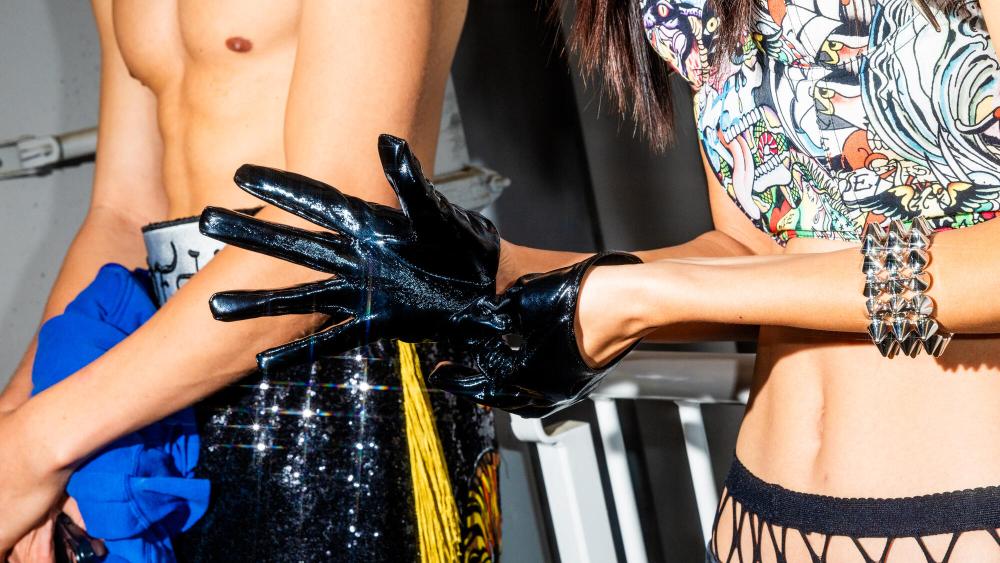
Gen Z Isn’t Done with Fashion; Just Editing It, Depop Reports
Fashion is still moving at internet speed — but Gen Z isn’t.
Between economic anxiety, political noise and environmental dread, younger consumers are tightening their wardrobes and closing their wallets. According to Depop’s 2026 trend report, style is shifting away from constant reinvention toward something more selective, repetitive and emotionally grounded: fewer pieces, worn more intentionally, with taste, not trends, doing the heavy lifting.
Dubbed “The Edited Self,” the British re-marketplace’s forecast argues that Gen Z is responding to instability by refining, not abandoning, fashion. Outfit repetition is on the rise, with capsule wardrobes gaining more traction than ever.
The capsule wardrobe market was valued at $1.3 billion in 2023 and is projected to reach $2.6 billion by 2030, growing at a CAGR of 10.5 percent, according to Strategic Market Research, while Google searches for “how to capsule wardrobe” increased by as much as 100 percent in the last 12 months.
Depop’s translation? The British company sees secondhand remaining relevant. Consumers are remixing the past, romanticizing the everyday, even repurposing sportswear — all new ideas that require old items. The result is a resale-friendly, taste-driven market where confidence comes from consistency, not novelty, according to the peer-to-peer resale platform.
Building on last year’s insight called “The New Fundamentals,” this year’s report uncovers how global pressures, both IRL and URL, have prompted a move toward a sharper, more willful approach.
“Digital saturation has accelerated trend cycles and has influenced a shift in how people identify their personal style,” the wholly owned subsidiary of Etsy said. “Consumers are choosing quality over quantity, emotional connection over novelty and personal authorship over algorithm-driven churn, and they want clothes that reflect who they are.”
It’s also structurally reflective of this changed approach.
While last year’s 2025 trend forecast was a joint venture with Edited, an AI-driven retail intelligence platform, the 2026 report was driven just by Depop. The proprietary insights and statistics cited throughout — such as the finding that 61 percent of people dress up for confidence or that eight in 10 people repeat the same outfits — are derived from this research framework, further to illustrate the industry’s move toward inclusive individualism.
To put it another way: If the 2026 fashion landscape is a curated gallery, Depop is both the lead researcher and the curator, using the museum’s “foot traffic” (aka search data) and “viewer feedback” (aka cultural research) from its 43.5 million users to predict the following exhibit.
Everyday Ceremony

If people are going out less, they’re not showing it. Depop determined that everyday activities are increasingly viewed as opportunities for personal expression through clothing, with consumers using items like tailored coats and bold accessories to elevate even simple routines.
One Depop user, Kethia from Virginia, shared in the report that “clothing is an unspoken expression of who I am.”
“When I show that through dressing up, I feel even more like myself, which makes me more confident in my everyday life,” she said.
Characterized by the belief that the outfit makes the moment matter — rather than waiting for a big event to dress up — key words for “Everyday Ceremony” included statement coats and otherwise sculptural silhouettes (Napoleon jacket was up 1,202 percent) as well as jewelry-forward (men’s jewelry was up 87 percent), looks that turn errands, workdays and “nowhere” moments into something that feels — er, looks — punctuated and personal.
“The rise in demand of luxury vintage shows me that people are going for an elevated bold ‘everyday’ look more commonly these days,” said one Depop seller, @dutchfonzie, within the report.
They’re not alone. Depop found that “many people now dress up on regular days to express confidence and support emotional comfort,” reflecting a cultural shift in how consumers use fashion to express identity and participate in culture. As highlighted in the report, TikTok creator and stylist Michelline said, “I dress like I have somewhere to be, even when I don’t.”
That said, “Everyday Ceremony” isn’t about peacocking. Depop clarified that confidence — which is different from attention — is the primary motivator, according to respondents, many of whom say dressing up helps them feel more present in routines that are otherwise blurring into screen feeds.
“Dressing up makes me feel ready and confident, particularly at work, because that’s where I spend most of my time,” said one Depoper, Halailah from Austin, within the report.
According to a Boston Consulting Group study, Gen Z is driving the resale market, with secondhand fashion accounting for a significant portion of their wardrobes. This focus on resale overlaps with recent search trends for metallic skirts, structured blazers, and kitten heels, as well as increased interest in brands like Willy Chavarria, Reformation, Miu Miu and Amina Muaddi.
Romanticized Sports

Athleisure isn’t being killed off, although it is being toned down. Amid a World Cup year in 2026, Depop reported that sportswear was evolving from performance gear into a cultural signal — where vintage jerseys, track jackets and ski silhouettes are styled for affiliation and ease rather than function.
“Comfort and function rule for me,” said one Depoper, Ceephas from Minnesota, within the report. “When I’ve made comfortable look good, I know I’ve done something right.”
Searches for “vintage Lululemon” and “upcycled jerseys” skyrocketed — up 1,689 percent and 233 percent, respectively. The pivot, according to Depop, reflects consumers’ broader appetite for sport-inflected looks that feel aspirational without actually being gym-bound. According to Depop’s survey, one in three people’s primary outfit inspiration comes from everyday life and culture.
“I like to look good while still knowing that I’m ready for whatever the day can throw at me,” said one Depoper, Joey from Seattle, within the report.
Eight in 10 people reported comfort as the primary reason they turn to an outfit, Depop found. With that in mind, the “Romanticized Sports” emphasis is on proportion, contrast and high-low mixing for sportswear that relaxes an outfit rather than dominates it.
Take, for example, Cecilie Bahnsen (up 314 percent). According to Sneaker Freaker, the Danish designer gained significant attention in 2023 for her sold-out collaboration with Asics.
Modern Uniforms

Modern Uniforms is where “consistency becomes the new flex and taste becomes the throughline,” the peer-to-peer platform said, all about “dressing with clay and conviction.”
Uniform dressing is no longer the fallback; it’s back as a flex. Depop data saw 78 percent of respondents often or always repeat outfits or silhouettes. More than half described the habit as freeing. Depop determined that, as decision fatigue creeps into even the act of getting dressed, reliable replicas (think tailored trousers, sharp outerwear, crisp button-downs) will become the backbone of Gen Z wardrobes.
“People are choosing dependable silhouettes and repeatable pieces that feel like personal codes rather than trends,” the report said. “It’s worn through trusted staples like perfect trousers, sharp outerwear and consistent silhouettes that anchor the wardrobe. In 2026, consistency feels calming, intentional and taste-driven in a world that feels chaotic.”
Neo Nostalgia

In uncertain times, the past feels safer than the future — and Gen Z is dressing accordingly. Depop reported that nearly two-thirds of respondents were drawn to styles from past eras. The secondhand site saw searches spike for everything from bandage dresses (up 542 percent) and JNCO jorts (up 495 percent) to medieval references (up 240 percent).
“I love wearing vintage pieces in a modern way,” Depoper Kethia said in the report. “I also love to rework clothes, thrifting older pieces and making them shorter/longer, and altering them into my modern interpretation of the piece.”
Two-thirds of people (65 percent) are drawn to styles or items from past eras, Depop reported, with eight in 10 people mixing references from different eras in their outfits, the platform’s survey data showed. And according to that data, 71 percent of people affected by current events are drawn to styles from past eras. More specifically, 58 percent of people concerned about the environment are drawn to past eras. Depop data also found that 70 percent of people seek comfort in clothing, and 42 percent are overwhelmed by trends.
“I use the old pieces most times as the statement piece of the outfit, as it stands out because of its uniqueness,” said one Depoper, Taoheed from Minnesota, in the report. That said, “Neo Nostalgia” is less about historical accuracy and (much) more about emotional grounding.
“Nostalgia feels safer because the past is sure,” the report said. “It’s psychologically safer to deal with the known than to face the unknown; better the devil you know.”
The nostalgia of 2026 is edited, layered and personal: think 1990s knits paired with ’70s coats, Y2K accessories mixed into modern silhouettes. Rather than recreating an era wholesale, wearers are collaging references that feel familiar and reassuring. Secondhand makes that remix possible, said the report: offering both style variety and psychological comfort.
“In a scenario of uncertainty and global anxiety, consumers of all ages seek refuge, escapism and joy in references to the past, especially in products, experiences and brands that evoke childhood or adolescence,” WGSN reported.
Key silhouettes included layered proportions and relaxed fits as well as elongated tops and asymmetric styles. Among those stylings, key behaviors include era-mixing and archival remixing, Depop said, as well as expressive layering. Think vintage knits and printed tops, long skirts and metallic belts.
“Authenticity comes from recombination, choosing the references that comfort you, shaped you, intrigued you and collaging them into something unmistakably your own,” Depop said. “Style becomes a timeline built from memory, mood and myth — a visual language for emotional continuity.”


You May Also Like

Why Successful Women Over 40 Stay Single
The viral Stanley Quencher cups have 40% off
