
Maternal health and the innovative technology helping to support new mothers
According to research by the Maternal Mental Health Alliance, at least one in four women will experience a mental health problem during pregnancy or in the early years of motherhood – and yet 70 per cent of those who do will hide or underplay their struggles. This speaks volumes about both the scale of the issue and the culture of silence that surrounds it.
Marie Louise, NHS midwife, bestselling author, and Momcozy brand ambassador for the company’s International Women’s Day campaign, spoke at the AllBright Step Forward 2026 summit as part of her partnership with the brand. Addressing the pressures facing modern mothers, she shared: “More women than ever before have so much pressure on them, to do it all, to be it all, to perform at work and be this kind of perfect mother at home. It’s so unachievable and unrealistic.”
Marie Louise spoke candidly about the state of maternal healthcare and workplace culture in the UK, making a compelling case that society is asking more of mothers than ever before while providing less support than they need.
A brain transformed
What is often missing from workplace policy and public understanding is a grasp of the physiological reality of new motherhood. According to 2024 research published in Nature Neuroscience, MRI scanning has confirmed that the brain is genuinely rewired during pregnancy, and again with each subsequent child. This process, known as matrescence – a term gaining significant traction in maternal health circles – represents what Marie Louise describes as the biggest shift a human being can go through across their entire lifespan.

“A new mother’s brain has actually changed,” she explains. “She’s a completely new person with a whole new perspective on life who’s gone through a whole body transformation.”
The implications for how we approach the return to work are profound. Yet the default expectation in some workplaces can be that a woman will simply pick up where she left off. The result, Marie Louise argues, is not a failing on the part of mothers, it is a structural failure.
Know your rights
One area where working mothers are particularly underserved is breastfeeding in the workplace. Under UK law, specifically the Management of Health and Safety at Work Regulations 1999, employers must provide a private, healthy, and safe environment for breastfeeding mothers to rest and express milk (not a toilet).
While there is no strict statutory law mandating specific breastfeeding facilities, failing to provide this space after a written request may breach the Equality Act 2010, which prohibits discrimination against breastfeeding mothers. However, a 2025 report from the University of Reading shows that – despite legal protections against discrimination – many women face a lack of suitable, private facilities and time to express milk, with some forced to use toilets or cupboards.
For the growing number of women breastfeeding while navigating demanding careers, this matters enormously. Milk supply operates on a biological rhythm that cannot simply be paused for convenience. When a mother cannot express when needed, it occupies her entire attention.
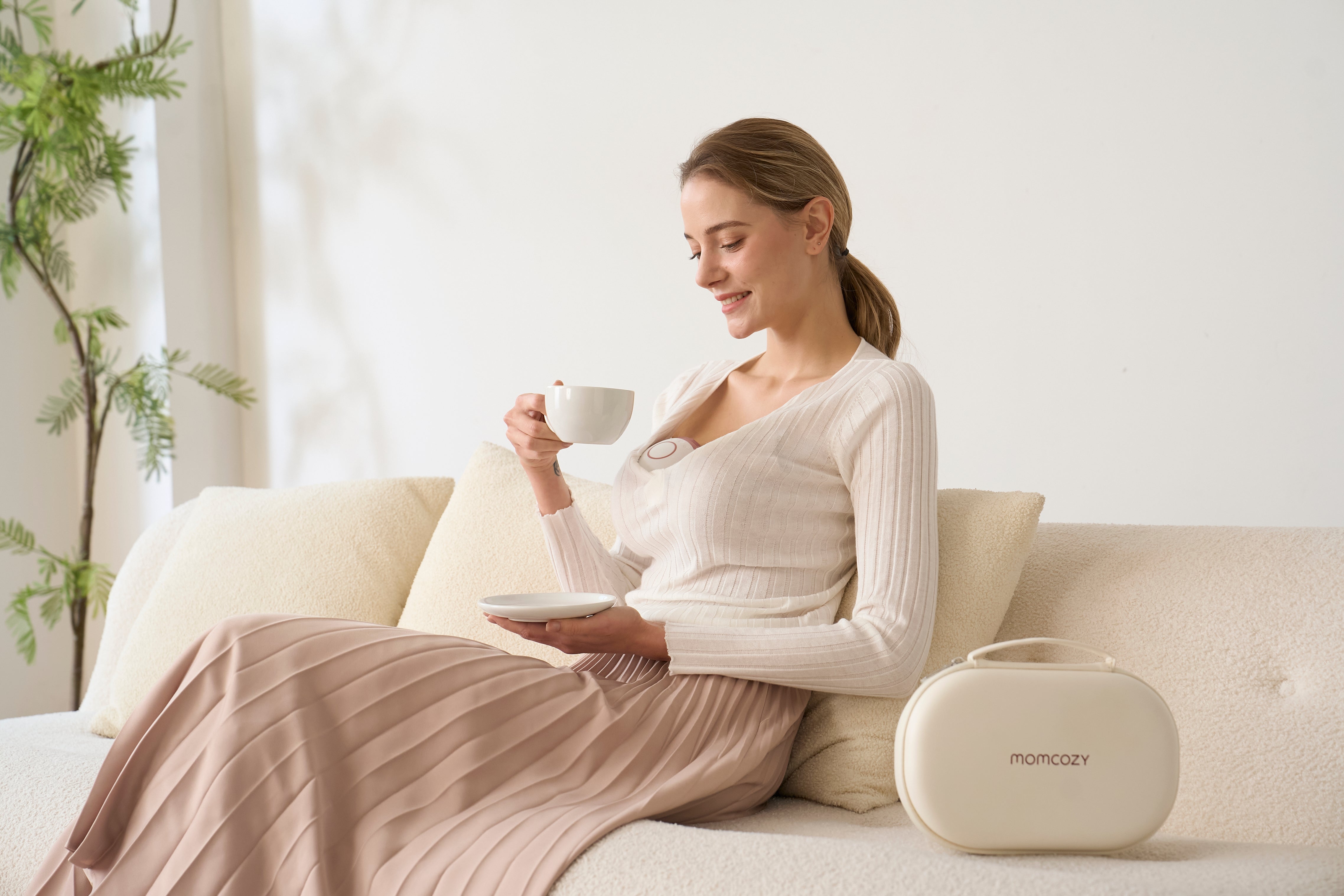
This is where innovative technology that helps to support breastfeeding mothers comes in. The Momcozy Air 1 Ultra-slim Breast Pump is just 2.4 inches thin and the slimmest wearable breast pump on the market. The pump sits virtually invisibly inside a standard nursing bra, allowing mothers to express hands-free during meetings, at their desks, or while on a Teams call, without anyone in the room knowing.
Its ultra-quiet operation and smart app connectivity, which tracks milk volume in real time and sends full-collector alerts, helps remove the guesswork and the disruption from what is otherwise an exhausting logistical challenge. Its wireless charging case supports up to 15 pumping sessions on a single charge, making it genuinely built for the working week.
“Expressing breast milk can be near impossible when you’re at work without a wearable breast pump,” says Marie Louise. “For mothers to have that flexibility is absolutely crucial.”
Reframing the conversation
Marie Louise is also vocal about the role of brands in shaping how motherhood is perceived. At a time when unrealistic portrayals of perfect, effortless maternity fill social media feeds, she argues that the brands mothers interact with daily carry real responsibility.
Momcozy has built its identity around designing products that reflect the actual lived experience of modern motherhood, from the Postpartum Recovery Essentials Kit, which provides practical physical support in those raw early weeks, to its broader range of tools designed to help mothers recover, feed, and function in the real world.
Changing the system requires sustained effort at every level – in healthcare, in legislation, in workplace policy, and in culture. But it also requires, as Marie Louise puts it, that we stop telling women to try harder and start asking instead: what adjustments can we make to genuinely support them?
For more expertise, advice, and innovative products designed to support working mothers, visit Momcozy at uk.momcozy.com


You May Also Like

Ludovic de Saint Sernin Spring 2026 Runway, Fashion Show & Collection Review

What is ‘oatzempic’? The TikTok trend that promises easy weight loss
