Kering Details Ambitions for Saint Laurent, Bottega Veneta, Balenciaga
While Gucci got the most airtime at Kering’s Capital Markets Day in Florence on Thursday, Kering chief executive officer Luca de Meo also outline his ambitions — and action plans — for other key fashion brands:
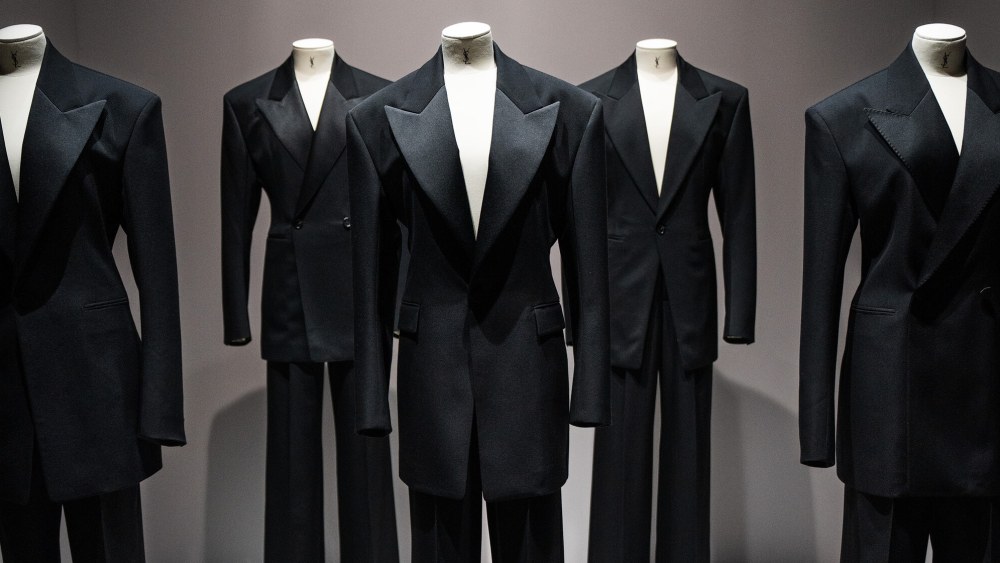
Saint Laurent: Calling the house “part of fashion aristocracy,” the CEO said the goal is to “magnify what already makes the house unique” and leverage its “rich reservoir of icons,” which include Le Smoking, founder Yves Saint Laurent‘s feminine take on the tuxedo.
“The next chapter is how to reawaken and reinvigorate icons, to transform them into iconic products that go beyond fashion cycle, give them renewed visibility,” de Meo said, citing the recent relaunch of the Mombasa bag from the Tom Ford era as an example. It is now one of the top five selling lines in Saint Laurent boutiques.
“In leather goods, these icon products should represent around 30 percent of revenues by 2030,” he said.
The executive also spies significant potential in menswear and the ambition is to make men’s “a true pillar of the maison… We will more than double the segment.”
Jewelry, especially costume jewelry, is seen as another growth engine, “with the business set to triple by 2030,” de Meo said.
“In parallel, we are targeting a doubling of sales to VICs by 2030 to reach 25 percent, without alienating the aspirational clients. We have the objective to achieve more than 500 million euros of sales in entry-price categories.”
There is also a plan to double Saint Laurent’s business in Asia by 2030 via increased marketing investments, a brand show in Asia and “more locally relevant communications.”

A Balenciaga display at Kering’s Capital Markets Day.
Jerome Bonnet/Courtesy of Kering
Balenciaga: Lauding it as “one of the most distinctive houses in international luxury,” and a favorite of Gen Z, de Meo said that VICs already account for 25 percent of the business.
“The next chapter is about channeling Balenciaga’s influence with confidence, and finding a stronger balance between categories and genders,” he said.
He trumpeted year-to-date growth rates of more than 20 percent in leather goods, led by the hit Rodeo and City bags, with the new Bolero and 7 models coming on strong.
The goal is to double Balenciaga’s leather goods business by 2030, and “scaling women’s as the primary engine of growth,” with women’s rtw also projected to double in size.
The first reactions to the creative direction of Italian designer Pierpaolo Piccioli are “pretty encouraging.”
“The priority now is discipline, evolution and protecting our legitimacy while reigniting the spirit of innovation that has always set this house apart,” he said.
Meanwhile, the plan is to stoke Balenciaga’s cultural relevance “by activating the brand across seven cultural territories: TV series, music, sports, wellness, gaming, innovation and patrimony.”
Bottega Veneta: De Meo touted the brand’s “global leadership in leather goods,” and said he plans to continue to emphasize that it is “firmly anchored in Venice,” eyeing the activation of partnerships in the Italian city to “elevate the communication impact and curate cultural partnerships.”
The ambition is for Bottega Veneta to be one of the top 10 luxury brands in brand equity, he said.
Among the goals he cited were to sharpen local resonance in Asia with a 10 percent increase in marketing; strengthen the brand’s leather goods and Intrecciato weave while extending the categories beyond this segment, expanding menswear, ready-to-wear and shoes and reinforce jewelry, both fine and costume; structure gifting and art-of-living to more than double the non-leather component, and increase VIC share by 50 percent by 2030.
Asked about the potential arrival of a new CEO following the exit of Leo Rongone on April 1, de Meo, who is overseeing the brand, said “we are moving in the right direction,” and that Bottega Veneta can “attract talent.”

The Bottega Veneta show space at the Kering Capital Markets Day.
jerome bonnet


You May Also Like

Dermatologists reveal the 9 skincare products parents should never buy for their children

Archie shows off skiing skills as Meghan praises her ‘quick learner’ | Lifestyle